
Based on the Insurance Information Institute and the Tennessee Department of Commerce and Insurance (January 2026). General guidance, not a reading of your policy.
Will homeowners insurance cover roof leaks? Often it will, when the leak comes from sudden damage like wind, hail or a tree limb through the roof. It usually won’t when the leak comes from age, wear or a problem that built up slowly. Your own policy and your insurer make the final call, and that call turns on one question: what caused the water to get in?
This guide explains how that question usually gets answered, what the Mississippi and Tennessee insurance departments tell homeowners to do after storm damage, and where a roofer fits in. If you need someone to look at the roof first, our residential roofing team in Hernando does free inspections across DeSoto County and the Memphis area.
What’s in this guide
- Why the cause of the leak decides coverage
- Leaks that are usually covered
- Leaks that usually are not
- What about the damage inside the house?
- What to do when the roof starts leaking
- Where a roofer fits in
- Storm season around Hernando and Memphis
- Roof leak insurance questions
Why the Cause of the Leak Decides Coverage
A homeowners policy pays for damage from the events it names, which insurers call perils. The Insurance Information Institute lists windstorm and hail as covered on every standard type of homeowners policy it charts, and falling objects and the weight of ice, snow or sleet on most of them.
What a policy is not is a maintenance plan. The same Insurance Information Institute guide puts it plainly: “It is your responsibility to maintain your home,” and policies will not cover “damage due to lack of maintenance, mold or infestation.” So two leaks that look the same from inside the house can get two different answers. A drip that started the night a storm tore shingles off is a storm claim. A drip from a pipe boot that cracked a few summers ago is wear.
That is why an adjuster spends their time on the roof, not on your ceiling. They are looking for signs of what happened and when.
Leaks That Are Usually Covered
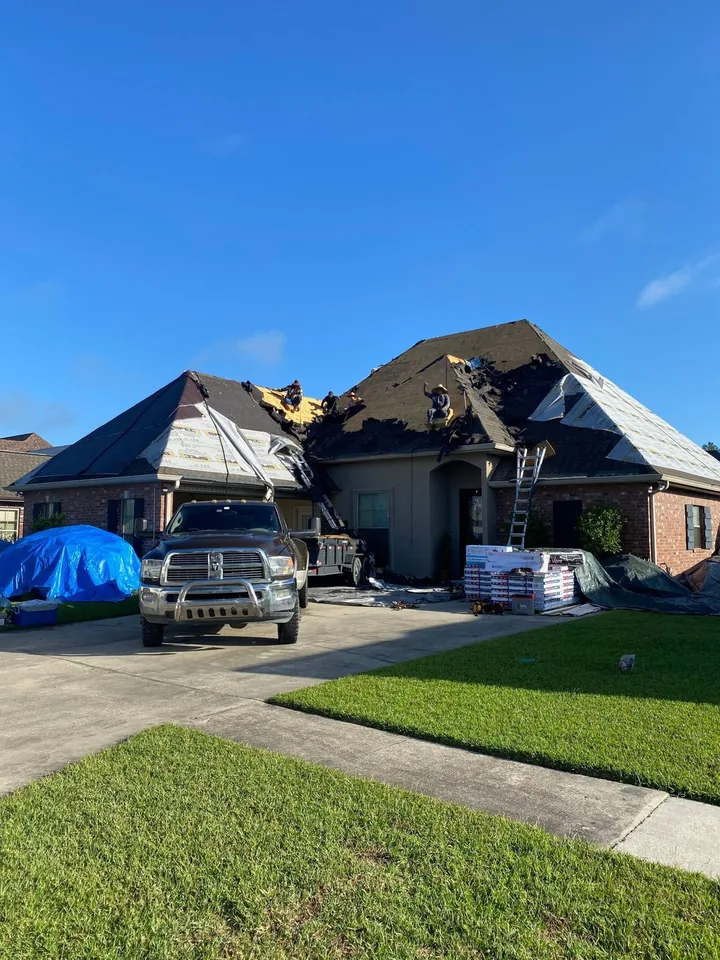
Most of the covered roof leaks we see around the Mid-South start with weather:
- Wind damage. Shingles torn off, creased or lifted so the seal breaks and rain gets under them.
- Hail. Bruised or cracked shingles and broken granule surfaces that let water through.
- A falling tree or limb. An opening in the roof from an object that came down on it.
- Wind-driven rain through storm damage. The Tennessee Department of Commerce and Insurance lists wind, wind-driven rain and falling trees among what most standard policies cover.
Even when the cause is covered, your deductible comes off the top, and older roofs may be paid out at a lower value depending on how your policy settles claims. Your declarations page shows both.
Leaks That Usually Are Not
These are the causes that tend to get a claim denied, because they point to age or upkeep rather than a single event:
- Old, worn-out shingles. Bald patches, curling and granules piling up in the gutters.
- Cracked pipe boots and dried sealant. Summer heat breaks down rubber and caulk over years, not in one night.
- Flashing that has rusted or pulled loose at a wall or chimney over time.
- Clogged valleys and gutters that held water against the roof edge until it rotted.
- A slow leak left alone. Damage that grew for months, including mold, is the kind of thing policies exclude.
If your leak falls into this list, a claim may not be the right path, and a roof repair is usually a smaller bill than people expect when it’s caught early.
What About the Damage Inside the House?
The ceiling, insulation, drywall and anything that got wet inside often follow the roof. When a covered event opened the roof, the inside damage is usually treated as part of the same loss. When it didn’t, the inside usually isn’t covered either.
One detail from the Tennessee Department of Commerce and Insurance is worth knowing: standard policies typically don’t cover interior water damage from a storm when the roof or walls weren’t damaged. In other words, the storm has to make an opening for the water first. Flood water is a separate policy altogether.
What to Do When the Roof Starts Leaking
The Mississippi Insurance Department’s storm claim tips, issued after the May 2026 storms, start with three steps: know your deductible, assess your damage, then decide whether to file. Its full list, along with the same advice from Tennessee’s department, comes down to this:
- Stop more damage. Both departments say to make the repairs needed to prevent further damage. Mississippi’s list names covering leaking roofs. Move belongings, catch the drip, and get the roof covered.
- Take photos and video of the roof, the ceiling and anything that got wet, before anything is cleaned up.
- Hold off on permanent repairs. Mississippi’s guidance says not to have permanent repairs made until your insurer has inspected and you have agreed on the cost.
- Keep every receipt, including for the tarp or temporary repair.
- Report it promptly if you decide to file. Your policy may set a time limit for notice.
- Keep a record of every call: who you spoke with, the date and what was said.
- Ask for an itemized explanation of any settlement offer.
If you have questions about your claim, the Mississippi Insurance Department takes calls at 601-359-3569 or 1-800-562-2957. For a Tennessee policy, the Tennessee Department of Commerce and Insurance is at 615-741-2218 or 1-800-342-4029, and it can mediate a declined claim when the policy was written in Tennessee.
Where a Roofer Fits In
The claim itself is between you and your insurance company, and the decision to file is yours. What we can do is tell you what is on the roof.
- A free inspection. We check the roof, find where the water is getting in, show you what we found, and explain how the claim process works so you know what to expect.
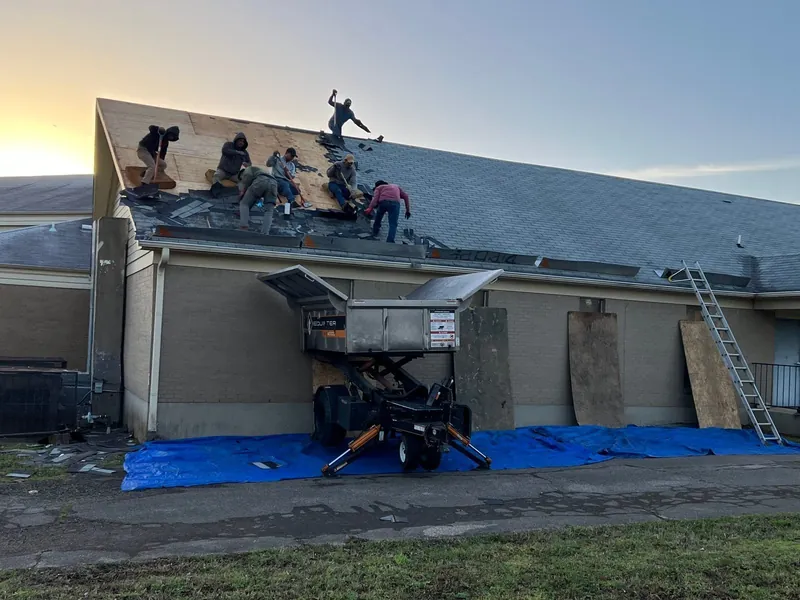
- Tarping first if water is coming in. Our emergency roofing line is open 24 hours. We cover the damaged area so the house stops taking on water, then make the permanent repair.
- On the roof for the adjuster. If you file, we can be on the roof when the adjuster comes out.
- Working from the approved scope. If the claim is approved, we work from the scope your insurer approved.
If the leak turns out to be wear rather than storm damage, you hear that from us too, along with what the repair involves.
Storm Season Around Hernando and Memphis
The hail, straight-line wind and fallen limbs that storms bring through the Mid-South are exactly the sudden damage policies are written for. The catch is that a roof already worn thin by summer heat lets storm water in faster, and an adjuster may see both kinds of damage on the same slope.
The cheapest way to keep a future claim simple is a roof with no old problems on it. A roof inspection before storm season tells you where you stand.
We are based in Hernando and work on homes in Hernando, Southaven, Olive Branch, Horn Lake, Senatobia, Holly Springs and across the state line in Memphis. If you’re not sure what caused your leak, our residential roofing team can come out and look, or use the form on this page.
Roof Leak Insurance Questions
Does homeowners insurance cover a roof leak from old age?
Usually not. Policies cover sudden damage from named events like wind, hail and falling objects. The Insurance Information Institute says policies will not cover damage due to lack of maintenance, so a leak caused by worn shingles or a cracked pipe boot is normally treated as upkeep.
Is water damage to my ceiling covered if the roof leaked?
It usually follows the cause. If a covered event like wind or hail opened the roof, the inside damage is usually part of the same claim. The Tennessee Department of Commerce and Insurance notes that standard policies typically do not cover interior water damage from a storm when the roof or walls were not damaged.
Should I fix the leak before the adjuster comes?
Make the repairs needed to stop more damage, like covering the roof with a tarp, and keep the receipts. The Mississippi Insurance Department advises not having permanent repairs made until your insurer has inspected the property and you have agreed on the cost.
How long do I have to report a roof leak to my insurance?
It depends on your policy. Both the Mississippi and Tennessee insurance departments say to file as soon as possible, because your policy may require notice within a certain time. Check your policy or call your agent.
Will filing a roof claim raise my premium?
That depends on your insurer and your claim history, and only your insurance company can answer it. Some homeowners ask their agent how a claim would be handled before deciding whether to file.
Can a roofer be there when the insurance adjuster comes?
Yes. If you decide to file, we can be on the roof when the adjuster comes out. The claim itself stays between you and your insurer, and if it is approved we work from the scope your insurer approved.