
Sources: FEMA P-2181 Fact Sheet 3.3.2, Low-Slope Roofs (March 2022); OSHA 29 CFR 1910.28(b)(13).
Commercial roof maintenance comes down to a schedule. FEMA recommends inspecting a low-slope roof at least twice a year, ideally in spring and fall, plus after any high-wind event, and getting needed repairs done quickly so more damage doesn’t follow. NRCA, the National Roofing Contractors Association, gives building owners the same advice and adds hail to the list of storms that call for an extra look.
This guide covers what that schedule should include on a business roof in North Mississippi and the Memphis area, what to check on a flat or low-slope roof, and the safety rules that decide who goes up there. Our commercial roofing page covers the repair and replacement side.
What’s in this guide
- Why business roofs need a schedule
- The commercial roof maintenance checklist
- Flat and low-slope roofs: keep the water moving
- After a storm
- Who should go on the roof
- Keep a roof log
- How we help businesses here
- Commercial roof maintenance questions
Why Business Roofs Need a Schedule
A house roof is steep, so water runs off it fast, and most of it can be seen from the yard. Many business roofs are the opposite. A storefront, a church, an office or a warehouse may have a flat or low-slope section that nobody sees from the parking lot, where water drains slowly toward a few drains or scuppers, and where heating and cooling units, vents and hatches all cut holes in the surface.
That is why problems on a business roof tend to grow quietly. A clogged drain, a seam starting to open or flashing pulling away from a parapet wall gives no warning until a ceiling tile stains over the sales floor. A leak there can close part of the building and ruin stock, which costs far more than the visit that would have caught it.
The Commercial Roof Maintenance Checklist
FEMA’s low-slope roof fact sheet breaks a roof into its parts: the covering, edges and overhangs, parapet walls, vents, drainage, openings like hatches and skylights, and rooftop equipment. A maintenance visit should touch each one.
| Part of the roof | What to check |
|---|---|
| Drains, scuppers, gutters | Clear of debris; overflow drains open; downspouts carrying water away |
| Roof surface | Blisters, splits, punctures, worn spots on foot-traffic paths |
| Seams and laps | Edges lifting or separating |
| Edges, copings, parapets | Edge metal and coping tight and fastened; flashing sealed to the wall |
| Rooftop equipment | Curbs flashed and sealed; access panels secured; equipment fastened down |
| Penetrations, hatches, skylights | Seals and boots intact; hatches closing and latched |
| Inside the building | Stained ceiling tiles, damp insulation, drips after rain |
Components from FEMA P-2181 Fact Sheet 3.3.2 (March 2022).
Two items on that list deserve extra attention.
The first is the roof edge. FEMA notes that built-up and modified bitumen roofs have performed well in high winds as long as the edge flashing or coping doesn’t fail, “which happens frequently.” Loose edge metal is where wind gets its first grip on a roof.
The second is rooftop equipment. Units that aren’t held down, or access panels that blow off, can tear the roof surface around them in a storm.
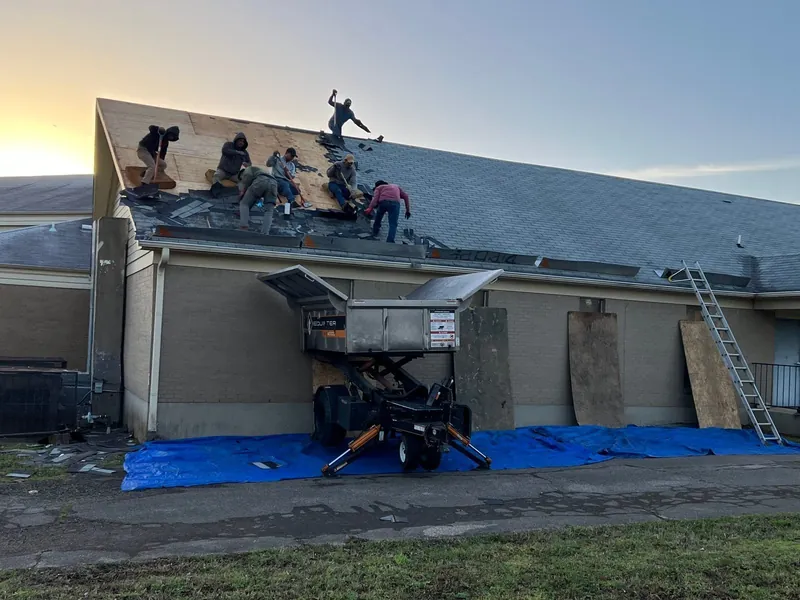
Flat and Low-Slope Roofs: Keep the Water Moving
Maintenance on a flat roof is mostly about drainage. FEMA lists the drainage parts of a low-slope roof as interior drains, gutters or scuppers connected to downspouts, and secondary or emergency overflow drains or scuppers. If those clog, water has nowhere to go but sideways into seams and flashing, and the weight of standing water adds load the roof wasn’t built to carry.
- Clear the drains of leaves, gravel and trash at every visit, and after any storm that drops debris on the roof.
- Watch for ponding. Note where water still stands a couple of days after rain. A spot that ponds every time is a spot to watch for leaks.
- Trim trees back. FEMA recommends keeping trees around the building trimmed so they don’t extend over the roof, and inspecting gutters regularly to clear vegetation and tighten loose connections.
- Limit foot traffic. Technicians servicing rooftop units wear paths into the surface. Ask that they stick to one route, and check that route closely.
Low-slope roofs are covered in several ways, including built-up roofing, modified bitumen and single-ply membranes such as EPDM and TPO. The details differ, but the maintenance logic doesn’t: keep water moving, keep seams and edges tight, and fix small openings before water finds them. Some business roofs combine a pitched shingle section with a low-slope one, and the joint between the two is worth a close look.
After a Storm
Spring and summer storms here bring straight-line wind, heavy rain and hail, and the edges of business roofs take the same beating as the shingles on houses. FEMA advises an inspection after high-wind events to see whether storm damage occurred, and NRCA adds hailstorms. After a hard storm, look from the ground for edge metal that is bent or lifted, debris on the roof and anything missing from the rooftop units, then have the roof itself checked.
If water is coming in right now, the first job is to stop it with a tarp or temporary cover. Our emergency roofing page explains how that works; we are open 24 hours.
Who Should Go on the Roof
It is tempting to send the building’s own maintenance person up with a broom and a tube of sealant. Before you do, know the rules.
OSHA’s standard for walking-working surfaces, 29 CFR 1910.28(b)(13), covers work on low-slope roofs. An employee working less than 6 feet from the roof edge must be protected by a guardrail, safety net, travel restraint or personal fall arrest system. From 6 to 15 feet back, the same applies, with a designated area allowed only for work that is both infrequent and temporary. Beyond 15 feet, the employer still needs a protection system, a designated area, or, for infrequent and temporary work, a work rule that keeps people from going within 15 feet of the edge without fall protection.
NRCA also advises against inexperienced property management staff walking on roofs, and recommends hiring an experienced roofing contractor promptly when an inspection turns up needed repairs. A roofer brings the equipment and knows what a lifting seam looks like before it leaks.
Keep a Roof Log
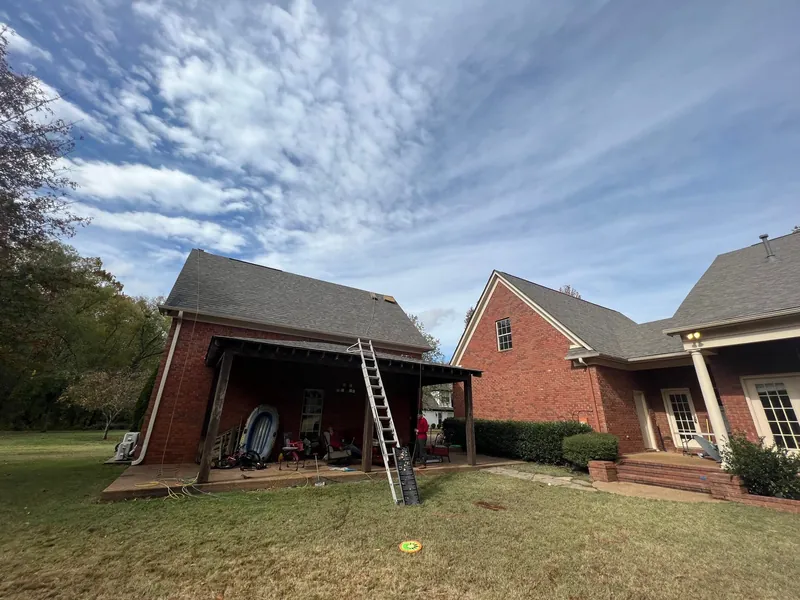
A simple log makes maintenance work better every year. Keep the date of each inspection, what was found and fixed, photos of the same spots each visit, and every leak with the date and the weather that caused it. Patterns show up quickly: a drain that clogs every fall, a corner that leaks only in wind-driven rain. When it is time to budget for a roof replacement, the log shows whether the roof is wearing evenly or failing in a few spots that repairs can still handle.
How We Help Businesses Here
Advance Roofing & Restoration does commercial roofing in Hernando, across DeSoto County and into Memphis. The first visit is a free inspection. We go up, look at what the roof is actually made of and where it is failing, and tell you in plain terms what it needs.
When there is a leak, we trace it back to where the water gets in before we fix anything, and if a repair will hold, that is what we recommend. You get a written estimate before any work starts.
We work on business roofs in Hernando, Southaven, Olive Branch and Horn Lake, south to Senatobia, east to Holly Springs and north in Memphis. To get the roof over your business checked, see our commercial roofing service or use the form on this page.
Commercial Roof Maintenance Questions
How often should a commercial roof be inspected?
At least twice a year, ideally in spring and fall, and again after any high-wind event or hailstorm. That is the schedule both FEMA and NRCA recommend for low-slope roofs. Repairs found on an inspection should be done promptly so the damage doesn't spread.
What does commercial roof maintenance include?
Clearing debris from drains, scuppers and gutters, checking the roof surface and seams, checking the flashing at walls, parapets and roof edges, looking at the curbs and panels on rooftop equipment, sealing around penetrations, and making small repairs before they leak. Keeping a dated record of each visit helps you spot patterns.
How do you maintain a flat roof?
Keep the water moving. Flat and low-slope roofs depend on drains and scuppers, so clear them regularly, watch for water that stands long after rain, and have the surface, seams and edges checked twice a year and after storms. Keep foot traffic to the paths people actually need.
Can my maintenance staff go up on the roof?
Carefully. OSHA's walking-working surface rules require fall protection for employees working near the edge of a low-slope roof, with the type depending on how close to the edge they work, and NRCA does not recommend inexperienced property management staff walk on roofs. Many owners leave roof checks to a roofer for that reason.
Why is my building leaking where the roof looks fine?
Water rarely comes in where the stain shows. On a business roof it often enters at flashing along a wall or parapet, a seam, the curb around a rooftop unit or a backed-up drain, then travels before it drips through a ceiling tile. Tracing it back is the first job on any commercial leak.
Is a commercial roof inspection from Advance Roofing free?
Yes. The first visit is a free inspection of the roof, and we give you a written estimate before any work starts.