
Sources: Asphalt Roofing Manufacturers Association, February 2026; This Old House, “What Is the Cost of Roof Repair?”, updated March 5, 2026. National figures, not a quote.
Can you repair a section of a roof? Yes, in most cases. Asphalt shingles are built to be repaired in place, and a roofer can replace a handful of shingles, a strip of flashing or a whole damaged slope without touching the rest of the roof. Whether you should depends on how old the rest of the roof is, how much of it is damaged, and whether the new section will match.
This guide walks through the three sizes of job, from a spot repair to a partial reroof to a full replacement, what each one involves, and how to tell which one your roof needs. If you want a straight answer on your own roof, our roof repair visits start with a free inspection.
What’s in this guide
- Three sizes of roof job
- Spot repairs: how they work
- Replacing one section or slope
- Will the new shingles match?
- When a section repair isn’t the answer
- What about shingling over the old roof?
- Who should do the repair
- Partial roof repair questions
Three Sizes of Roof Job
| Job | What it covers | Usually right when |
|---|---|---|
| Spot repair | A few shingles, a pipe boot, a piece of flashing, a ridge cap | The damage is in one place and the rest of the roof is sound |
| Section or slope replacement | Tear-off and new shingles on one area or one face of the roof | One slope took the storm or a tree, and the others still have life |
| Full replacement | Every slope, down to the deck | Damage or wear is spread across the roof, or it keeps leaking in new places |
This Old House puts minor roof repairs at $150 to $1,000 nationally, moderate ones at $1,001 to $2,000, and major repairs, which can include partial replacement, at $2,001 to $8,000. Individual items run from about $50 to $800 for shingle damage and $200 to $500 for chimney or roof flashing. A full new roof averages $15,439 in the same guide; our roof replacement cost guide covers what moves that number.
Spot Repairs: How They Work
The reason a shingle roof can be fixed a few pieces at a time is the way it is put together. Each shingle is nailed down and then held by a sealant strip that bonds it to the one below. ARMA explains that sealed shingles can be unsealed by hand to reach the nails underneath, so a damaged shingle comes out, a new one goes in, and the shingle above is hand-sealed back down. Only a small area of the roof is disturbed.
Most homes here have asphalt shingle roofs, and most of the repairs a typical one needs are small:
- Cracked pipe boots around plumbing vents, worn out by summer heat.
- Wind-lifted or missing shingles after a spring thunderstorm broke their seal.
- Nail pops, where a nail backs out and pushes up the shingle above it.
- Flashing at a chimney or wall that has dried out, rusted or pulled loose.
- Cracked ridge caps along the peak.
None of those is a reason to replace a roof that is otherwise in good shape. The catch is that the leak inside is rarely right under the problem, so the repair is only as good as the search for the source. Water runs along the underlayment and rafters before it drips, which is why we trace it from the roof side before we fix anything.
Replacing One Section or Slope
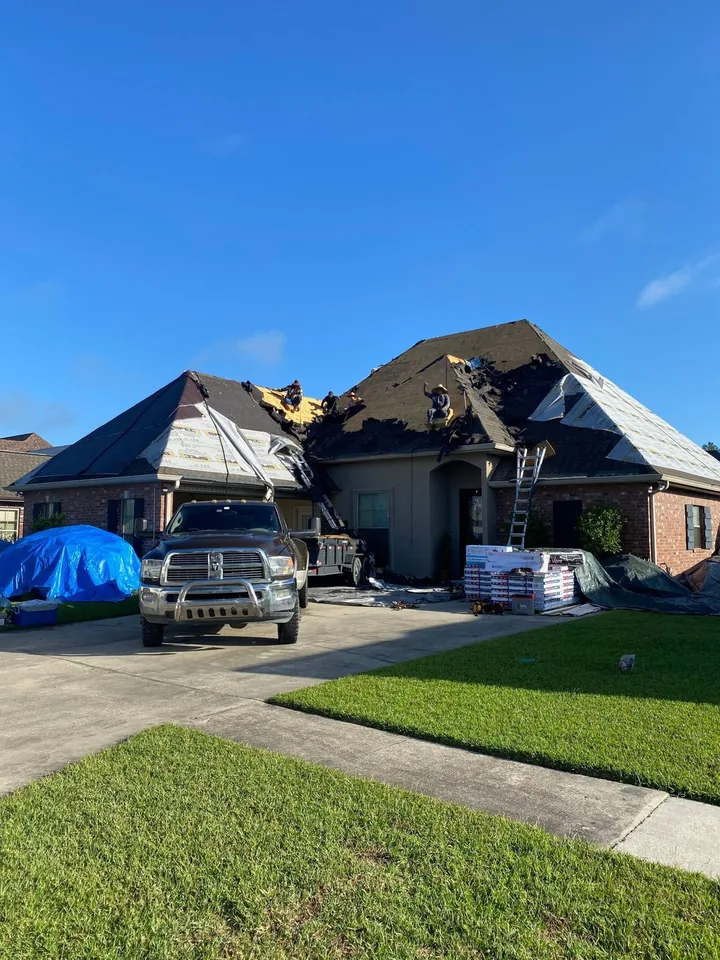
Between a spot repair and a full roof sits the partial reroof: tearing off and replacing one area, often a whole face of the roof. It makes sense when the damage is significant but contained. A limb came down on the back slope, or the side facing the storm lost most of its shingles while the others came through fine. Owens Corning notes that when damage is limited to one area, partial reroofing may be an option and is likely to cost less than a complete reroof.
A good partial job ties the new shingles into the old ones at the edges, usually at a ridge, hip or valley where the change is least visible, and replaces the underlayment, flashing and any soft decking in that section. Done well, it is watertight. The trade-offs are looks and timing: the old slopes are still aging, so the rest of the roof will need replacing on its own schedule.
Will the New Shingles Match?
This is the question that decides most section repairs. New shingles almost never look exactly like ones that have spent years in the sun. Owens Corning says even spare shingles left over from the original job may be close but not match exactly, because the ones on the roof have faded. ARMA adds that the difference will generally become less apparent over time as the repair ages on the roof.
Three things help:
- Saved shingles. ARMA calls shingles saved from the original install one of the best ways to match a repair. If there is a bundle in your garage, tell your roofer.
- The color name and install year. Knowing them helps a roofer find the closest current product, since lines and colors get discontinued.
- Where the repair sits. A patch on a rear slope nobody sees matters less than one over the front porch.
If the damage came from a storm and you are filing a claim, how a mismatch is handled is between you and your insurer under your policy. Our guide to whether homeowners insurance covers roof leaks explains how insurers look at storm damage against wear.
When a Section Repair Isn’t the Answer
This Old House suggests considering a replacement when more than 30% of the roof is substantially damaged, and says replacement is more likely to make sense when the roof is decades old, has significant damage, or needs regular repairs. In practice, these are the signs that patching has stopped paying:
- The shingles are brittle on every side, with bare patches and curling edges, so new repairs crack the old shingles around them.
- Granules are piling up in the gutters and at the downspouts.
- This is the third leak in a few seasons, each in a new spot.
- The deck is soft in more than one area.
- Hail hit every slope. A storm that bruised shingles on every side is usually a replacement, not a patch.
At that point, each repair buys less time, and the money is better spent toward a roof replacement you will need anyway. We will tell you which side of that line your roof is on, and why.
What About Shingling Over the Old Roof?
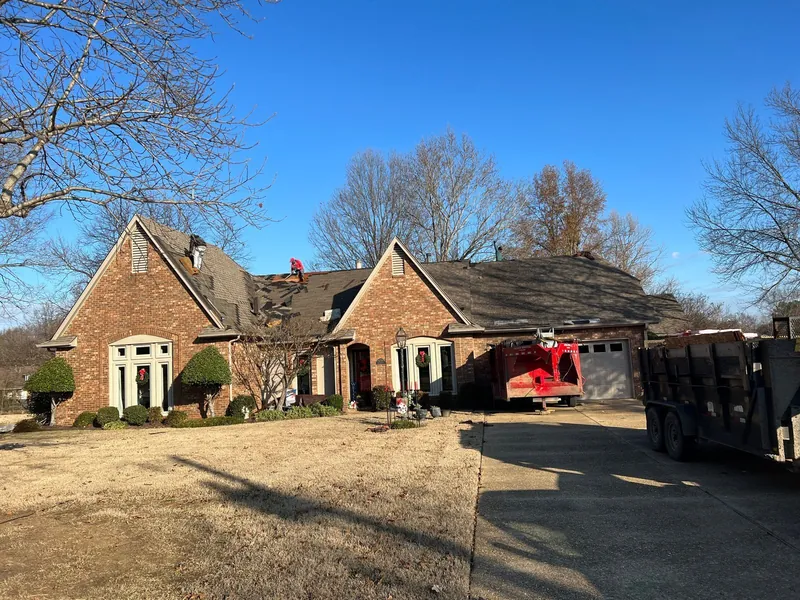
Laying new shingles over the old ones, called a recover or overlay, sometimes comes up as a cheaper middle path. ARMA notes that local codes control it and most do not allow more than two roof coverings on a building. It also lists the cases where a tear-off is likely needed instead: the roof already has two layers, the deck has rot or warping, the old shingles are too uneven to lie flat under new ones, or the existing shingles are laminated, since most manufacturers don’t recommend overlaying those (ARMA, February 2024). An overlay also hides the deck, which is the one part of the roof you can’t inspect from above.
Who Should Do the Repair
Can a handyman repair a roof? For something on the ground, like re-hanging a gutter, maybe. For anything on the roof itself, a roofer is the safer call, for three reasons.
Finding the real source of a leak takes experience with how water moves under shingles. Replacing a shingle without cracking its neighbors or breaking their seals takes the right technique. And walking a pitched roof safely takes the right equipment, especially on a two-story house.
Advance Roofing & Restoration is based in Hernando and owned by Greg Stephens. The first visit is a free inspection: we find where the water is getting in, and if a repair will hold, that is what we recommend. If it won’t, we say so and explain why. Small items found early often fit into a roof maintenance visit, and our asphalt shingle roof maintenance guide shows what to watch for between visits.
We repair roofs in Hernando, Southaven, Olive Branch, Horn Lake, Senatobia, Holly Springs and across the state line in Memphis and Collierville. Start with our roof repair page or use the form on this page.
Partial Roof Repair Questions
Can you repair just a section of a roof?
Yes. Asphalt shingles are designed to be repaired in place: ARMA explains that sealed shingles can be lifted by hand to reach the nails, so damaged ones can be replaced and the shingle above resealed. A larger damaged area, such as one slope, can be torn off and reroofed on its own if the rest of the roof is sound.
Can you repair just part of a roof that has hail or wind damage?
If the damage is limited to one area, usually yes. Owens Corning notes that partial reroofing may be an option when significant damage is limited to one area, and is likely to cost less than a complete reroof. If hail or wind damaged every slope, a full replacement usually makes more sense.
Will a repaired section of roof match the rest?
Rarely exactly at first, because the old shingles have faded in the sun. ARMA says the difference generally becomes less noticeable as the repair ages, and that shingles saved from the original install, or knowing the color name and install year, give the closest match.
When should I replace the roof instead of repairing a section?
This Old House suggests considering replacement when more than 30% of the roof is substantially damaged, or when the roof is decades old or needs regular repairs. Brittle shingles on every side, granules piling up in the gutters and repeated leaks in new places are the usual signs.
Can a handyman repair a roof?
For ground-level work like re-hanging a gutter, possibly. Anything on the roof is better left to a roofer: finding where a leak really starts, replacing shingles without cracking the ones around them, and working safely on a pitched roof all take experience and equipment.
How much does it cost to repair part of a roof?
This Old House puts minor roof repairs at $150 to $1,000 nationally, moderate repairs at $1,001 to $2,000, and major repairs, which can include partial replacement, at $2,001 to $8,000. Your roof's pitch, height and what is under the damaged shingles move the real number. Our inspection and estimate are free.